
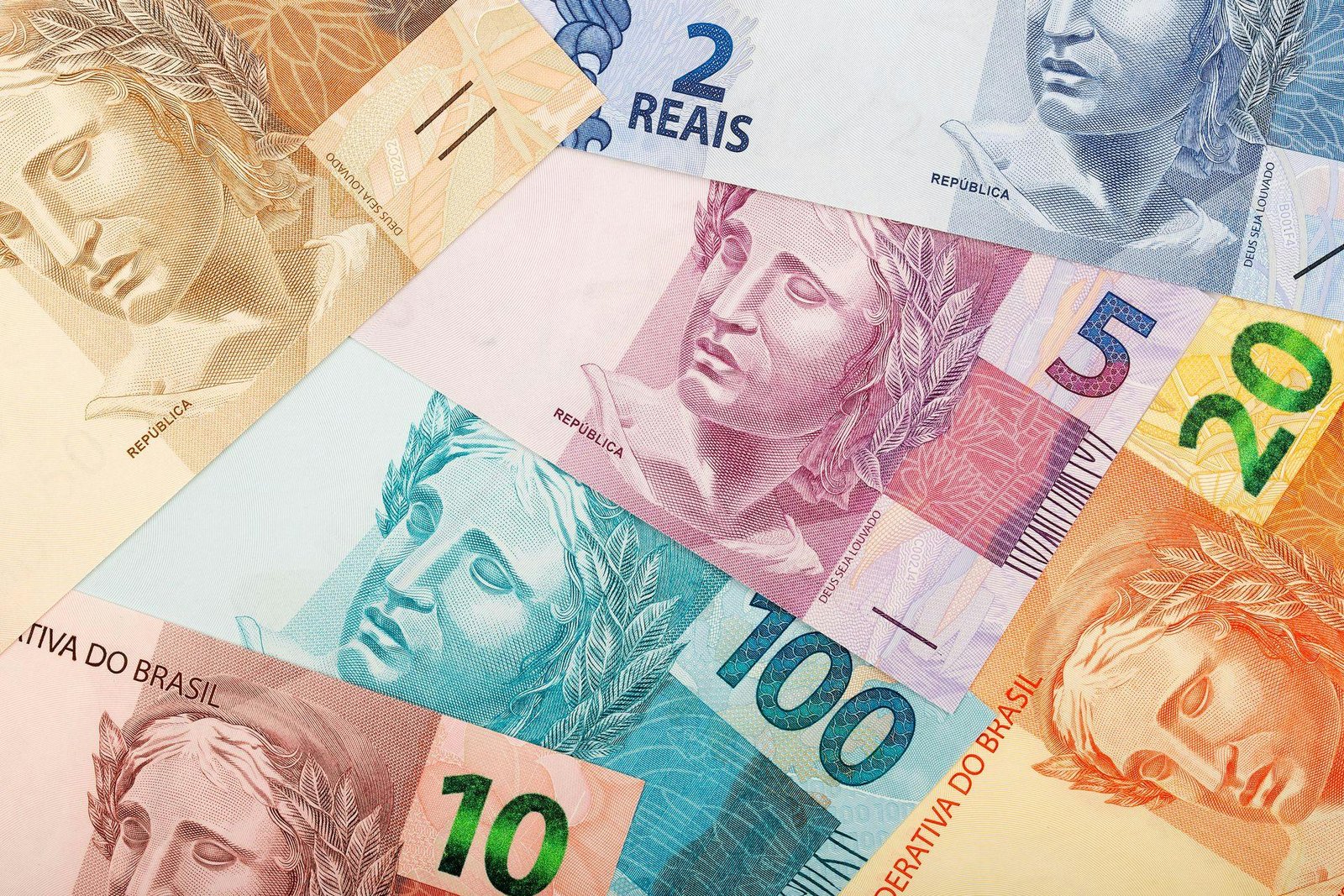
One of the first things you need to bear in mind before booking your trip to Chile is the currency exchange rate. That's because it's the main way you're going to get things done there, be it food, tours (if they're bought on the spot), leisure and other experiences.
The exchange rate determines how much foreign currency you will receive in exchange for your US dollars, Brazilian reais or other currency of origin. That's why we've put together some tips for you to be well prepared when it comes to exchanging currency - and what you should and shouldn't do at these times.
And unlike in the past, when it was much easier to just take cash, there are now several ways you can exchange money - even on the spot - and start preparing for your trip right away!
Why is it important to pay attention to the exchange rate when traveling to Chile?
The exchange rate in Chile can have a major impact on a traveler's budget. Variations in the exchange rate can affect the purchasing power of foreign currencies, directly influencing spending during your stay in the country. For example, an unfavorable exchange rate can mean that you receive fewer Chilean pesos in exchange for your foreign currency, making local products and services more expensive.
To deal with these variations, it's important to be aware of exchange rate trends and plan your expenses accordingly. Strategies such as exchanging some of your money before your trip or using credit cards with low conversion rates can help minimize the impact of exchange rate fluctuations on your travel budget.
Tips for Changing Money in Chile
When exchanging money in Chile, it's important to follow a few tips to get the best exchange rate and avoid unnecessary fees. Here are some useful recommendations:
– Compare the rates: Before exchanging money, compare the exchange rates at different bureaux de change to make sure you're getting the best deal.
– Avoid changing at the airport: Exchange rates at airports tend to be higher, so avoid exchanging a large amount of money there if possible.
– Consider using cardsInternational credit cards can be a convenient option for making payments and withdrawals in Chile, but be aware of the transaction fees and IOF (taxes) charged.
– Wise/Nomad: are two very powerful applications which, if used correctly, can save you a lot of money. We'll talk more about them later!
By following these tips, you can maximize the value of your money during your trip to Chile and avoid unpleasant surprises related to the exchange rate.
Is there a minimum to take to Chile?
When it comes to your stay, leisure, food... It's very relative. It's important to research restaurants you'd like to visit, tours you'd like to do and put all this into your budget to make an average. Or decide in advance and adapt according to your needs, days and so on.
However, as we've already told you here (insert link to 1st text), the Chilean government requires you to enter with at least 46 dollars a day (around R$ 200). Although immigration agents don't always look at this information, it can be requested at any time. That's why it's important to have this amount in mind - whether in cash or digital credit cards - before boarding.
How to exchange cash in the country?
As we mentioned above, one of the options is to carry out the transaction at an exchange office already in the country. You take amount in kind that you want to change into reais and exchange it as soon as you get there. But it's important that you don't exchange the amount at the airport. It's important to note that the exchange bureaus do not accept Pixsince it is an exclusively Brazilian transaction system.
Because it's a place with a large flow of people - and often without much information - the exchange offices at the airport end up using a very low conversion value. In other words, you'll get far fewer Chilean pesos in return for your real. Currently, R$ 1 gets you between 180 and 190 Chilean pesos. At the airport, the difference will be less, for example, 150 / 160 pesos per real, for example*.
There are a few places in the capital where you can make exchanges with better scores and get the best value for your money. We've already explained in this Instagram postYou can check it out, but we'll summarize it in the next few lines.
Where is it best to exchange real for Chilean peso in Santiago?
Our recommendation is not about any specific bureau de change, but about a few places where you can find better exchange conditions and where you can trust. It's important to always try to check the rates at each one and always choosing the best quote for you. Oh, and important: see the purchase priceas you will be buying Chilean pesos with your reals.
Some of the places we recommend:
In Las Condes:
Afex at Parque Arauco (10:00 a.m. to 6:30 p.m. Monday to Saturday | 11:00 a.m. to 5:00 p.m. Sunday)
Afex at Av. Apoquindo Nº 6089 - right next to the Icon Hotel (9:00 a.m. to 6:00 p.m. - Monday to Friday | 10:00 a.m. to 2:00 p.m. - Saturday)
In Providencia:
At Av. Pedro de Valdivia No. 012 you will find more than 5 options for comparing rates. It's important to keep an eye on the opening hours of the bureaux de change at this location: 9:00 am to 6:00 pm - Monday to Friday and 10:00 am to 2:00 pm - Saturday.
Or in the Costanera Shopping Center, on the same floor as Jumbo, there is an Afex, with opening hours from 10:00 a.m. to 6:30 p.m. from Monday to Friday and 10:00 a.m. to 5:00 p.m. on Saturdays and Sundays.
Between the hours of 6pm and 9pm, you can withdraw money from the exchange ATM, which is located on Level 1 of the Costanera Shopping Center.
In the city center:
I'm sure you've heard of Calle Agustinas, right? There you'll find 7 bureaux de change, one next to the other. You can find the address on Google Maps: Agustinas N° 1070. Then you can choose the one with the best price. The opening hours are from 9am to 5pm Monday to Friday and from 10am to 2pm on Saturdays.
24-hour exchange:
If you arrive after 9pm and don't have Chilean currency, there are two ways to exchange it. The first is at the airport - although we don't recommend it, in times of urgency or need, it may be the best option.
The second option is the 24-hour ATM at More Exchange. It is located at 2814 San Sebastian Street and is open every day.
Important tip for the quote:
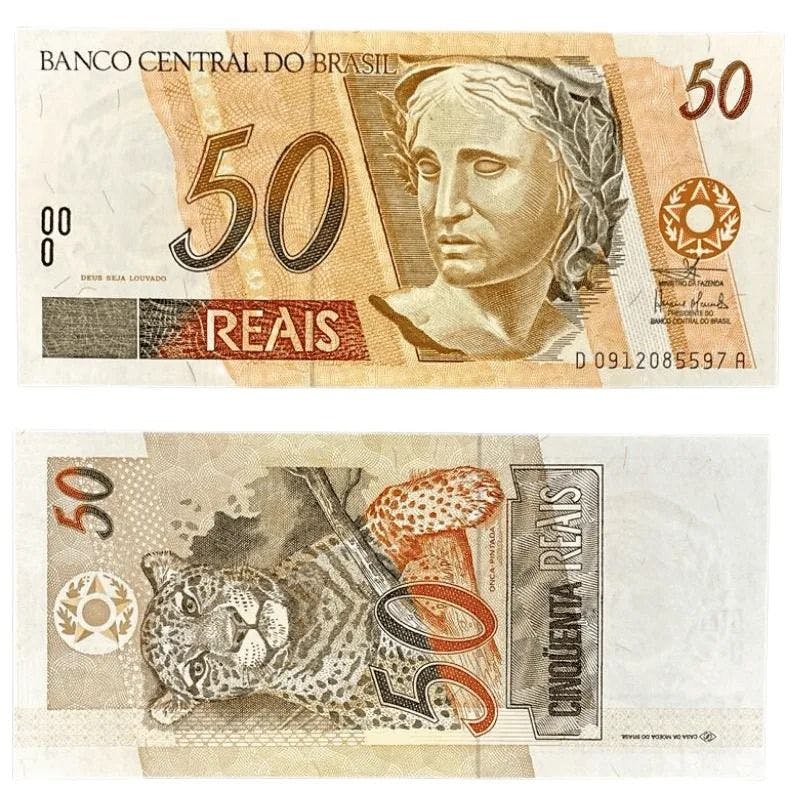
If you're going for the first time with Brazilian reals to exchange, you should know one thing: some bureaux de change and ATMs don't accept some Brazilian real banknotes. For example, the R$ 200 note and the old R$ 50 note (example above). We can't say why, but we've heard many reports. So be prepared to go with newer, lower denomination notes, okay?
What about credit cards?
It's also important to have a choice of credit cards to take with you, especially international ones. You will be subject to a tax when the bill is closed (which may be different from when you were traveling) + other charges from your bank (such as IOF, for example), but it can be a great option if you don't want to carry a lot of cash with you.
In general, this way of carrying money can be safer, and international cards are accepted in establishments. Just make sure your international card is unblocked for use.
But nowadays there are some digital account options specifically for international transactions, with lower interest and fees than traditional banks, such as Wise, Nomad and Western Union. The advantages of these cards are that you can accumulate the value in the currency of the place you're going (in our case, Chilean pesos) little by little, preparing in advance for your trip. We'll explain a little more about each of them, so you can prepare before your trip.
Wise
Wise offers an international debit card service for several currencies. In other words, you can top up the amount in reais and convert it on the day the exchange rate is most favorable to you.
For example, in February 2024 the exchange rate is staying at around R$ 1 = 190 Chilean pesos. During the winter period, as many Brazilians travel to Chile, there is a lot of supply of Brazilian currency (which causes the currency to devalue) and with the same R$ 1 you can exchange it for only 150 Chilean pesos. In other words, by buying at the right times, you can get more value for your money and save money on your trip. With this strategy, you can exchange more reals into pesos and spend the money for various purposes, such as:
- Withdrawal;
- Payments at establishments;
- Shopping in digital stores;
- Reservations and services abroad.
Clicking at this linkYou can get a fee waiver on your first transfer to the Wise account, up to a limit of 500 euros.
Nomad
The nomad card is also free - although there is a delivery charge to addresses in Brazil - and operates strictly for dollar transactions. You can top up your card, convert it to USD and keep the money in your account for transfers in more than 180 countries.
It can be a good option for withdrawals from ATMs in times of emergency. It is also widely accepted in shops, restaurants and other establishments, much like Wise.
Western Union
Although it is less used these days, due to digital accounts and credit cards, Western Union is a good option for remittances. For example, if you need a larger sum of money in an emergency, someone in Brazil can go to a Western Union branch and send it to you in Chile, with the amount already converted into pesos.
Is it worth taking dollars to exchange for Chilean pesos?
It all depends on the value of the conversion and the previous exchange operation. This is because if you have exchanged real for dollars and then have to exchange dollars for Chilean pesos, it may not be worth it in the end - even if there is a significant difference.
Now, if you already have this money in dollars sitting idle, it could be an option so that you don't have to capitalize in reais for the conversion. Keep an eye on the exchange rates in the periods prior to your trip so you can do the math and understand whether this exchange will be worthwhile in the future.
Plan for the exchange rate difference between countries
Although the difference between the Chilean and Brazilian exchange rates is quite large, you need to understand that the cost of things in the country can vary. So, although you can get R$ 190 Chilean pesos with R$ 1, the value of things can be quite "high".
For example, walking down the street, you can find a bottle of water for 700 Chilean pesos - which would be approximately R$ 3.50 at the current exchange rate. Lunch at a more economical place, on the other hand, can cost up to 7,000 pesos - approximately R$ 35.
As for a slightly more expensive restaurant, you can find main courses starting at 15,000 pesos - approximately R$ 75.00. So, although the exchange rate variation is "big", the price of things follows this variation, which can make the trip more expensive, especially if you don't prepare for it.
To understand more about this exchange rate variation, we post daily on our Instagram some of the tours, shopping and other expenses you may face during your trip to Chile. Follow us to stay up to date and prepare for your trip!
Now that you know more about how currency exchange works in Chile and how to prepare for your first trip here, you can find out more about how to prepare for each season and what to pack by clicking on this link here: How to prepare for your first trip to Chile.
* Exchange rates subject to change, average rate in February/2024.